How to Take Collagen Powder: Coffee, Water, Tea or Porridge
How to take collagen powder: how much to use, how to stir it into coffee, tea, water or porridge, whether hot drinks matter, and when to take it.
Written by Organic Gains. Published 31 October 2026.
Taking collagen powder comes down to two things: how much to use, and what to stir it into. Here are both, for hot drinks, cold drinks and breakfast, along with what heat does to collagen.
How to take collagen powder
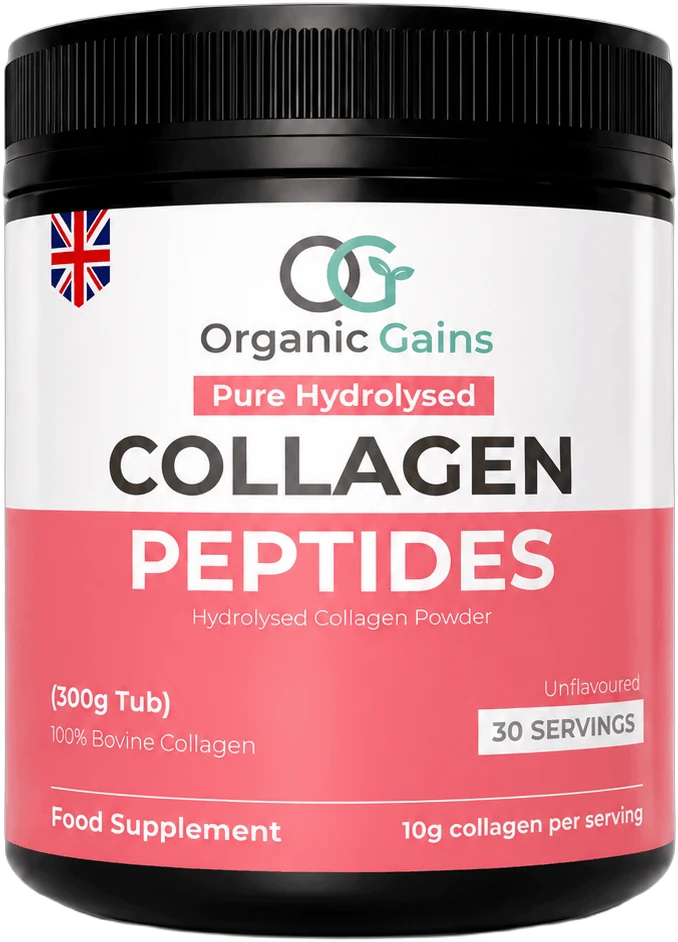
Stir one serving into a drink or your breakfast, once a day. On our Pure Hydrolysed Collagen Peptides, a serving is 10g, which is two heaped scoops, and the label says to take it once a day. The powder has no taste, so it goes into coffee, tea, juice, porridge or a smoothie, and a 300g tub holds 30 servings.
What a serving of collagen powder gives you
Here is what the label prints for one 10g serving:
| Per 10g serving | Amount |
|---|---|
| Protein | 9g |
| Energy | 36kcal |
| Fat | 0g |
| Carbohydrate | 0g, of which sugars 0g |
| Salt | 0.04g |
| Glycine | 2,210mg |
| Proline | 1,330mg |
| Hydroxyproline | 1,100mg |
With 9g of protein in every serving, the powder carries the claims authorised for protein. Protein contributes to a growth in muscle mass. Protein contributes to the maintenance of muscle mass. Protein contributes to the maintenance of normal bones.
Glycine, proline and hydroxyproline are amino acids, which MedlinePlus describes as the molecules that combine to form proteins. Collagen is made mostly of these three: a 2019 review of hydrolysed collagen put glycine at 33% of collagen's amino acids, and proline and hydroxyproline together at 22%. Our guide to whether collagen counts as protein goes into the protein side in more detail.
Collagen in coffee: does the heat matter?
You can stir it straight into a hot coffee or tea. If you have read that heat damages collagen, the 2019 review explains what heat does to it. It described collagen, as the body makes it, as three long chains twisted around each other into a triple helix, a little like a rope, and it noted that heating collagen above 40°C unwinds that helix, a change called denaturation.
Hydrolysed collagen is what comes after that step. The review described how, once the chains are separated, they are cut into small pieces called peptides, each around a fiftieth to a hundredth of the weight of the whole collagen molecule. The label calls our powder 100% hydrolysed bovine collagen peptides, so the change heat makes to collagen has already happened before the powder reaches your cup.
The same review described hydrolysed collagen as highly soluble in water, and as staying very thin in water however much of it is added.
How to mix collagen powder into hot and cold drinks
In coffee or tea, put the two scoops in your mug and pour the drink over while you stir. In water or juice, stir it in well with a spoon, or shake it in a shaker bottle with the lid on. In a smoothie, add the scoops with everything else and blend. In porridge, stir the powder through before you eat. Because the powder has no taste, the drink or the bowl tastes the way it always does.
How much collagen powder per day?
Take the serving on the label: 10g, two heaped scoops, once a day. The label also says not to exceed the recommended daily intake.
If you are curious about the amounts researchers have used, a 2021 systematic review from the University of Huddersfield looked at 15 randomised controlled trials that combined collagen with exercise. Eight of them gave people 5 to 15g a day of collagen peptides or collagen hydrolysate. The other seven used anything from 40mg to 60g a day, two of them using gelatine, and the supplements were taken as capsules or as powder with water.
No health claim is authorised for collagen itself in Great Britain, so we don't tell you what a particular amount of collagen does for you. Our guide to whether collagen gummies work looks at the research.
When is the best time to take collagen?
The label asks for one serving a day, so the best time is the one you will keep to. That might be your first coffee or tea of the day, or your breakfast porridge. If evenings suit you better, a serving stirred into a warm drink then is still your one serving a day.
Who collagen powder suits
Our powder is 100% hydrolysed bovine collagen peptides, marked gluten free and no added sugar, and not suitable for vegetarians or vegans. If you would like to know how bovine collagen compares with marine collagen, our guide to marine collagen vs bovine collagen sets them side by side. If you have a health condition, take medication, or are pregnant or breastfeeding, ask your GP or pharmacist before you start a supplement.
Getting started with collagen powder
If you want collagen you can stir into the coffee you already drink, Pure Hydrolysed Collagen Peptides is one ingredient, with 9g of protein in every 10g serving, no taste, and 30 servings to a 300g tub. Take two heaped scoops once a day, and you are done.