Creatine for Women: What It Does and How Much to Take
Can women take creatine? The claim the law allows, what research in women found, how much to take, and whether creatine will make you bulky.
Written by Organic Gains. Published 7 September 2026.
Women can take creatine, and the one general health claim authorised for it in Great Britain is written for adults who do high intensity exercise, with no line drawn between men and women. What is different is the research: there is less of it in women, so here is what it found, how much to take, and whether creatine will make you bulky.
What does creatine do for women?
In Great Britain one general claim is allowed for creatine, and it is the same for women as for men. Creatine increases physical performance in successive bursts of short-term, high intensity exercise, and the beneficial effect is obtained with a daily intake of 3g of creatine. That claim covers adults performing high intensity exercise, so it fits you if your training is made of short, hard efforts with rests between them: lifting, sprints, circuits, HIIT (high intensity interval training) classes, or a game of netball, hockey or football.
Creatine itself is a natural compound, and your body keeps about 95% of it in your muscles, according to the International Society of Sports Nutrition's 2017 position stand. About half of what your body uses each day comes from food, mainly red meat and seafood, and your liver and kidneys make the rest.
What research in women has found
Most creatine research has been done in men, or in groups of men and women together. A 2020 review in the journal Nutrients found 656 studies where creatine was the main thing being tested, and only 58 of them, 9%, were in women only.
A 2025 systematic review in Nutrients, from researchers at the Australian Catholic University, gathered 27 studies of creatine in active women, from recreational exercisers to elite athletes. Compared with a placebo, 3 of 11 studies found better strength or power, 4 of 17 found better results in short, all-out efforts (what the review called anaerobic exercise), and 1 of 5 found better endurance. Most studies found no improvement, and the reviewers said that how different the studies were, and how few, limited what can be understood about how creatine affects performance in active women.
A 2026 meta-analysis in Frontiers in Nutrition (a study that combines the results of many studies into one estimate) reviewed 34 studies of creatine in women who exercised or trained, with 692 participants, and combined the results of 21 of them. It found a small positive effect overall, and concluded that the evidence suggested possible small effects on some measures of strength, power, high intensity performance and lean mass. It rated the certainty of that evidence as low or very low.
So there is less research in women, and what there is has found small and mixed results. The claim itself doesn't change: it is set for adults performing high intensity exercise, and that includes you if you train that way.
Can women take creatine?
Yes. The 2020 review looked at 29 studies of women taking creatine monohydrate that checked for side effects, with 951 participants in all. It reported no deaths or serious side effects, and no significant difference in total side effects, stomach upsets, weight gain, or measures of kidney and liver function. If you have a health condition or take medication, ask your GP or pharmacist before you start.
Will creatine make me bulky?
The research in women points to small changes at most. The 2026 meta-analysis found possible small effects on lean mass, with low certainty, and the 2020 review found no significant difference in weight gain. A 2021 review in the society's journal also answered the steroid question directly: creatine is not an anabolic steroid.
What some people do notice is water. The same 2021 review said water retention in the first several days was the most common side effect of creatine. Our guide to whether creatine makes you gain weight goes through the water question in full.
How much creatine should a woman take?
The same amount as anyone else: at least 3g of creatine a day, because the beneficial effect in the authorised claim is obtained with a daily intake of 3g of creatine. The 2021 review concluded that daily doses of 3 to 5g were effective, and that a loading phase of bigger doses in the first week was not required. Our guide to how much creatine to take per day covers the dose in full.
Creatine for women over 40, 50 and 55
In your 40s or early 50s, the main claim applies to you exactly as it does at 25, as long as you do high intensity exercise.
Over 55, a second claim is authorised, for adults over 55 who do regular resistance training (training your muscles against weights or resistance): daily creatine consumption can enhance the effect of resistance training on muscle strength in adults over the age of 55. The beneficial effect is obtained with a daily intake of 3g of creatine in conjunction with resistance training which allows an increase in the workload over time, performed at least three times a week for several weeks, at an intensity of at least 65% to 75% of your one repetition maximum, which is the most weight you can lift once. Our guide to creatine over 55 covers it in full.
Pregnant or breastfeeding?
Ask your GP or pharmacist before you take creatine. Our label says the same: if you are pregnant, breastfeeding, taking medication or under medical supervision, ask your doctor before use.
Creatine gummies for women
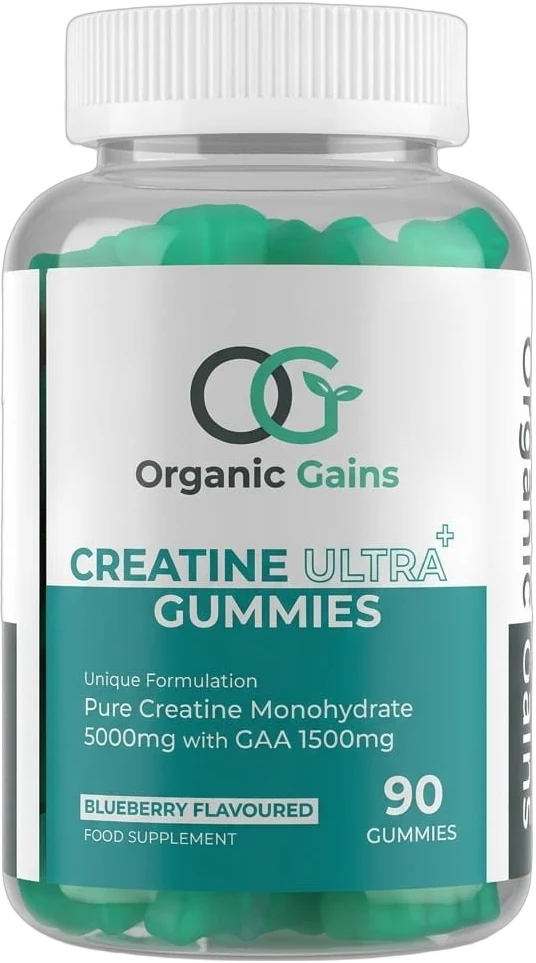
A gummy gives you a measured dose with no scoop to level, no shaker to wash and no gritty last mouthful. Creatine Ultra+ Gummies carry 5,000mg of creatine monohydrate and 1,500mg of GAA (guanidinoacetic acid) in three blueberry gummies, and 3,333mg of creatine monohydrate with 1,000mg of GAA in two. Three a day carry comfortably more than 3g of creatine, so for adults who do high intensity exercise, three is the serving that meets the claim: creatine increases physical performance in successive bursts of short-term, high intensity exercise, and the beneficial effect is obtained with a daily intake of 3g of creatine.
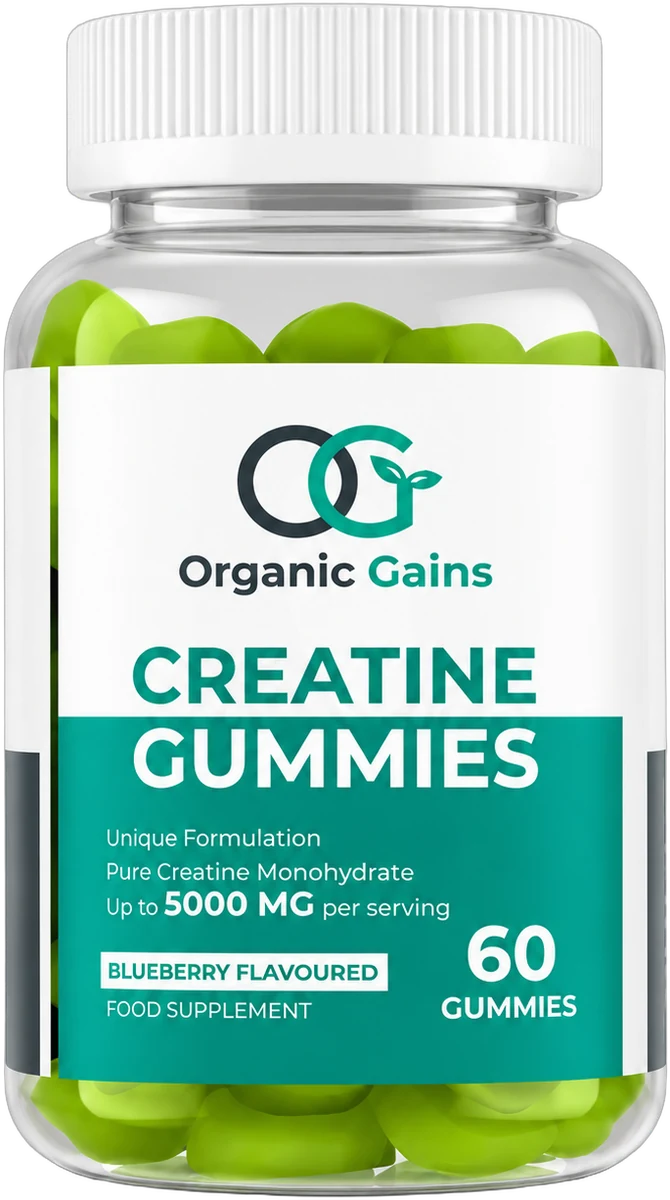
There are 90 gummies in a jar, which lasts 30 days at three a day or 45 days at two, and the label marks them vegan, gluten free and no added sugar. If you would rather have creatine monohydrate on its own, with no GAA, our Creatine Gummies give you up to 5,000mg of creatine monohydrate in a serving of three. Before you choose any gummy, our guide to whether creatine gummies work shows what lab tests found and how to read a label.
Where to start
If you lift, sprint or play a fast game and want creatine without the powder, take at least 3g of creatine a day and keep it daily. Three blueberry Creatine Ultra+ Gummies give you 5,000mg of creatine monohydrate, more than 3g of creatine, with free UK delivery on orders of £50 and over.