Is Creatine Vegan? Creatine for Vegans and Vegetarians
Is creatine vegan? How creatine supplements are made, how much creatine a plant-based diet has, and how to tell a vegan gummy from a gelatine one.
Written by Organic Gains. Published 5 July 2026.
Yes: the creatine monohydrate in most supplements is made chemically from two compounds, sarcosine and cyanamide, with no animal by-products in it. What can stop a creatine product being vegan is what goes around the creatine, such as gelatine in a capsule or a gummy, so here is how to check, and what research has found about creatine in vegetarians and vegans.
Is creatine vegan?
The creatine in most supplements is. A 2020 systematic review and a 2024 review in the journal Nutrients both said that the creatine in most supplements is made from sarcosine and cyanamide, contains no animal by-products, and is "vegan-friendly". Both added the same warning: creatine capsules are often made from gelatine, which can contain animal by-products.
So the creatine itself is rarely the problem. The thing to check is the rest of the product.
Where creatine comes from in food
In food, creatine comes from animals. The International Society of Sports Nutrition's 2017 position stand said creatine is found mainly in red meat and seafood, and that a pound (about 450g) of uncooked beef or salmon provides about 1 to 2g. A 2025 review of plant-based diets added that dairy carries small amounts, that an omnivore's diet gives about 1g a day, and that creatine is absent in plants.
That means a vegan diet has next to no creatine, and a vegetarian diet has a little from dairy and eggs. Your body doesn't rely on food alone, though: the 2024 review said the body makes about 1g of creatine a day of its own, mainly in the liver, kidneys and pancreas. The 2025 review concluded that going without creatine from food on a plant-based diet was unlikely to detract from health.
What research has found in vegetarians and vegans
The 2025 review said that the absence of creatine in plants contributes to lower creatine levels in the blood and muscles of people on plant-based diets. Here is what three trials measured.
A 2003 trial in the journal Medicine and Science in Sports and Exercise took muscle samples from 18 vegetarians and 24 non-vegetarians aged 19 to 55. At the start, the vegetarians' muscles held less creatine. After 8 weeks of weight training with creatine or a placebo, the vegetarians who took creatine had a bigger rise in muscle creatine than the non-vegetarians who took it.
A 2025 trial in Physiological Reports gave 15 vegans and vegetarians either creatine monohydrate or a dummy powder, four times a day for 7 days. Muscle creatine rose in the creatine group, but their power in repeated sprints did not change.
A 2026 trial in the European Journal of Applied Physiology gave 20 physically active vegan adults creatine monohydrate or a placebo for four weeks. The creatine group improved in jump tests, but showed no change in sprint or strength tests.
So the 2003 trial found that vegetarians started with less creatine in their muscles, and the 2003 and 2025 trials found that creatine supplements raised it. What that did for performance changed from one test to the next.
How to tell if a creatine gummy is vegan
A gummy needs something to set it, and the two setting agents to know are gelatine and pectin.
Gelatine comes from animals. UK food law defines gelatine as a protein made from the collagen in the bones, hides, skins, tendons and sinews of animals, so a gummy made with it is neither vegan nor vegetarian.
Pectin comes from fruit. The European Food Safety Authority's 2017 review of pectin described it as a natural compound found in fruit and vegetables, made mainly from citrus peel and apple pomace (what is left of apples after pressing).
Three checks tell you what you are buying:
- Look for a vegan mark on the label. It is the quickest answer.
- Read the ingredients for gelatine (sometimes spelled gelatin). If it is there, the gummy is not vegan or vegetarian.
- Read the whole list, even when you see pectin. The same EFSA review noted that sweets sometimes combine gelatine with pectin, so pectin on the list doesn't rule gelatine out.
Both our creatine gummies are marked vegan
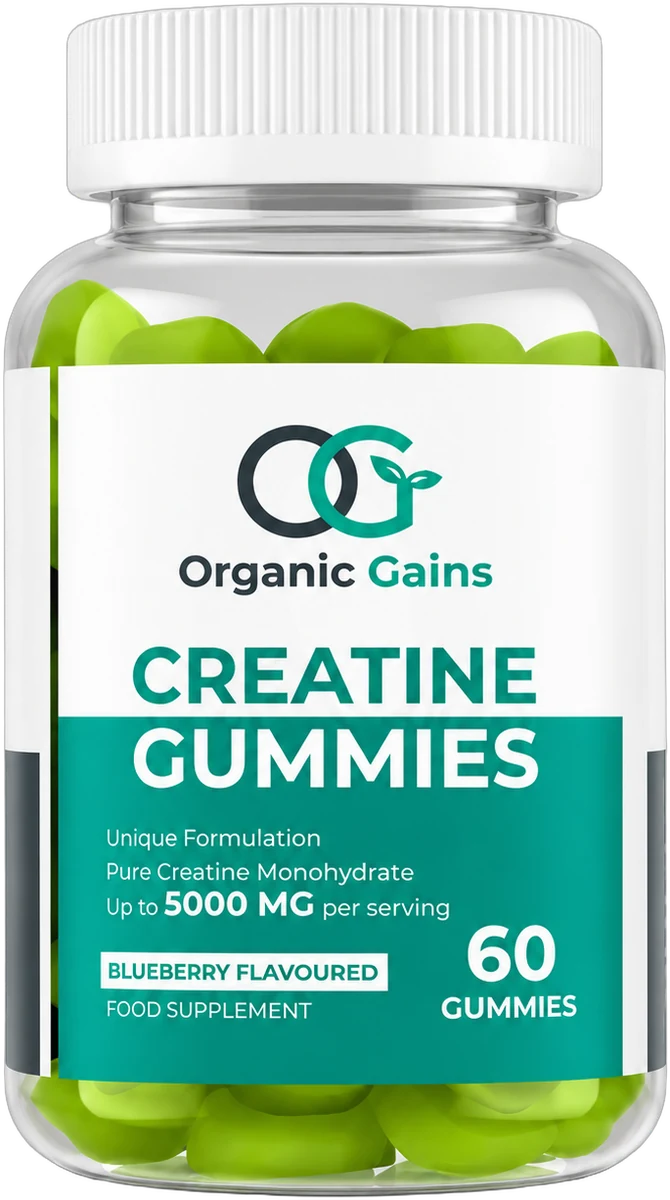
Our Creatine Gummies are pure creatine monohydrate, with up to 5,000mg of creatine monohydrate in a serving of three blueberry gummies, and the label marks them vegan, gluten free and no added sugar. There are 60 in a jar, which lasts 20 days at three a day.
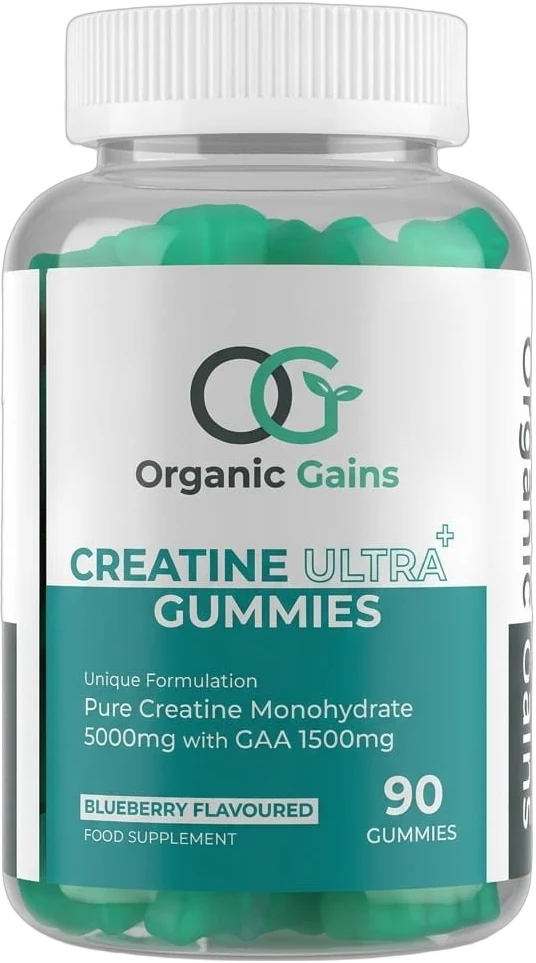
Our Creatine Ultra+ Gummies are marked vegan too, and their label backs that up: besides the creatine monohydrate and GAA, the other ingredients are water, pectin, sodium citrate, citric acid, stevia and vegetable oil (contains carnauba wax). Pectin is on the list, and gelatine is not. Three gummies give you 5,000mg of creatine monohydrate and 1,500mg of GAA (guanidinoacetic acid).
Three Creatine Ultra+ gummies a day give you about 4,395mg of creatine, because creatine monohydrate is 87.9% creatine by weight. That is comfortably more than 3g of creatine, the daily amount the claim asks for: for adults who do high intensity exercise, creatine increases physical performance in successive bursts of short-term, high intensity exercise, and the beneficial effect is obtained with a daily intake of 3g of creatine. Our guide to how much creatine to take per day covers the dose in full.
If you are after sugar free gummies, ours are not quite that: both are marked no added sugar, Creatine Ultra+ lists stevia among its ingredients, and two Creatine Ultra+ gummies carry 2g of sugars. Our marine collagen gummies contain fish, so they suit neither vegetarians nor vegans.
Choosing a vegan creatine
If you are vegan or vegetarian and you train hard, look for creatine monohydrate in a product marked vegan, with no gelatine on the list. Our Creatine Gummies are marked vegan, with up to 5,000mg of creatine monohydrate in a serving of three, and UK orders of £50 and over ship free. Before you buy any gummy, our guide to whether creatine gummies work shows what lab tests found and how to read a label.