Is 2,000 IU of Vitamin D Too Much? The UK Limits Explained
Is 2,000 IU of vitamin D too much? What it is in micrograms, the NHS's 10µg advice and 100µg daily limit for adults, and how to take a 2,000 IU gummy.
Written by Organic Gains. Published 11 August 2025.
For an adult, no: 2,000 IU of vitamin D is 50 micrograms, which is half the NHS's daily limit of 100 micrograms. It's also five times the 10 micrograms the NHS says is enough for most people, so here's how the numbers fit together and how to take a 2,000 IU gummy without going over the limit.
How many micrograms is 2,000 IU of vitamin D?
2,000 IU of vitamin D is 50 micrograms (50µg). The NHS explains that 1 microgram of vitamin D is equal to 40 IU (International Units), so you divide an IU figure by 40 to get micrograms. Our label prints IU while NHS advice uses micrograms, which is why the same amount can look so different on the jar and on the NHS website.
Here are the three numbers worth knowing, side by side:
| IU | Micrograms | What it is |
|---|---|---|
| 400 IU | 10µg | The amount the NHS says adults need each day |
| 2,000 IU | 50µg | One of our vitamin D gummies |
| 4,000 IU | 100µg | The NHS's daily limit for adults, and two of our gummies |
How much vitamin D does the NHS say adults need?
The NHS says adults need 10 micrograms of vitamin D a day, and that if you choose to take a supplement, "10 micrograms a day will be enough for most people".
When you need it depends on the sun. From about late March or early April to the end of September, the NHS says most people should be able to make all the vitamin D they need from sunlight on their skin. Between October and early March, we don't make enough from sunlight, so the government's advice is that everyone should consider taking a daily vitamin D supplement during the autumn and winter.
Some adults are advised to take it all year round: people who are not often outdoors, such as those who are frail or housebound, people living in a care home, and people who usually cover most of their skin when outdoors. The NHS adds that if you have dark skin, for example if you have an African, African-Caribbean or south Asian background, you should consider a daily supplement throughout the year too.
Is 2,000 IU of vitamin D a day safe for adults?
For adults, 2,000 IU sits within the NHS limit. The NHS says not to take more than 100 micrograms (4,000 IU) of vitamin D a day "as it could be harmful", and that this limit applies to adults, including pregnant and breastfeeding women and older people. At 50 micrograms, 2,000 IU is half of it.
Europe's food safety body reached the same figure. In its 2023 review of the evidence, the European Food Safety Authority (EFSA) set an upper level of 100µg a day for adults, including pregnant and breastfeeding women.
The limit is a total for the day: EFSA's upper level counts vitamin D from all sources, food included, so count every supplement you take. The same 2023 review found that people in Europe are unlikely to go over it, except for regular users of food supplements containing high doses of vitamin D. If you take a multivitamin, or any other supplement with vitamin D in it, add its vitamin D to your total.
The NHS also notes that some people have medical conditions that mean they may not be able to safely take as much. If you have a health condition, take any medication, or are pregnant or breastfeeding, ask your GP or pharmacist before you start.
What happens if you take too much vitamin D?
The NHS explains that taking too many vitamin D supplements over a long period of time can cause too much calcium to build up in the body, which is called hypercalcaemia, and that this "can weaken the bones and damage the kidneys and the heart". That's why the 100 microgram limit matters, and why it's worth adding up your supplements.
Sunshine is a different matter. The NHS says you cannot overdose on vitamin D through exposure to sunlight, though it still advises covering up or protecting your skin if you're out in the sun for long periods.
Can I take two 2,000 IU vitamin D gummies a day?
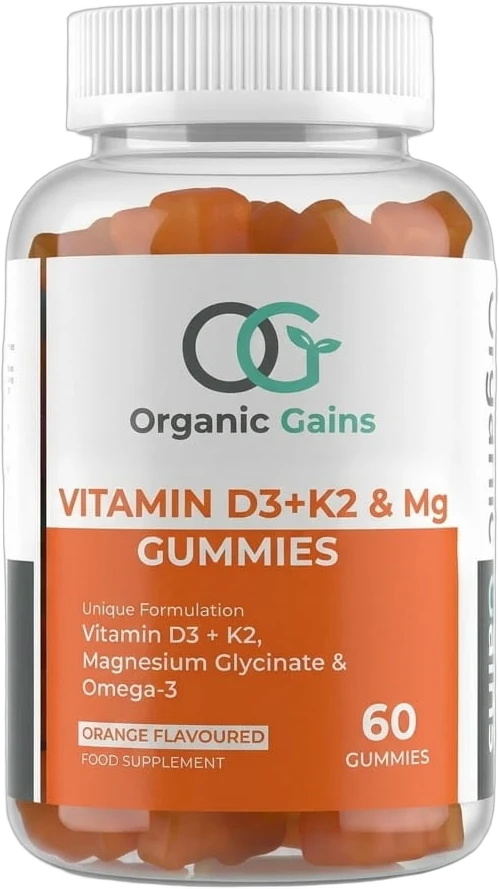
The label allows two a day, and no more. The label on our Vitamin D3, K2 & Magnesium Gummies sets a serving of one to two gummies a day. One gummy gives you 2,000 IU (50µg) and two give you 4,000 IU (100µg), which is exactly the NHS's daily limit for adults. So two a day is the ceiling: on a two-gummy day, don't add any other supplement that contains vitamin D, and never take more than two, because the label says not to exceed the recommended daily intake. EFSA's upper level of 100µg also counts vitamin D from food, such as oily fish, egg yolks and fortified foods, so two gummies on their own fill it.
One a day leaves you well under the limit, and a jar of 60 lasts two months that way, which covers a good stretch of the autumn and winter.
Are 2,000 IU vitamin D gummies suitable for children?
No, our gummies are not for children. The NHS limits for younger children are lower: children aged 1 to 10 should not have more than 50 micrograms (2,000 IU) a day, and babies under 12 months should not have more than 25 micrograms (1,000 IU) a day. A single one of our gummies is the whole day's limit for a child aged 1 to 10, before any food or other supplement, and twice the limit for a baby. Keep the jar out of reach of young children, as the label says, and see the NHS page for children's vitamin D advice.
When is the best time to take vitamin D?
The NHS vitamin D page doesn't name a best time of day, so pick the time you'll remember every day. A meal is a good anchor, and there's research behind it. A 2015 study gave 50 healthy older adults a single large dose of vitamin D3 (50,000 IU) with breakfast: in those whose breakfast contained fat, the vitamin D3 in their blood at its peak was 32% higher than in those whose breakfast was fat-free. So taking your vitamin D with a meal that has some fat in it is an easy habit to build.
As for the time of year, the NHS's autumn and winter advice covers October to early March, the months when we don't make enough vitamin D from sunlight.
What vitamin D does
Great Britain authorises a set of health claims for vitamin D, and each of our gummies carries 50µg of it. Here are five of them, in their authorised words. Vitamin D contributes to the normal function of the immune system. Vitamin D contributes to the maintenance of normal bones and normal muscle function. Vitamin D contributes to the maintenance of normal teeth. Vitamin D contributes to normal absorption/utilisation of calcium and phosphorus.
Each gummy also carries 150µg of vitamin K2 and magnesium glycinate. Our guide to vitamin D3 and K2 covers the K2 side.
If you'd like one simple daily vitamin D for the darker months, our Vitamin D3, K2 & Magnesium Gummies give you 2,000 IU of vitamin D3 in one orange gummy, with vitamin K2, magnesium glycinate and omega-3 from chia seed. One a day is two months from a jar.