Creatine Gummies vs Powder: Which Should You Take?
Creatine gummies vs powder side by side: the same creatine monohydrate, compared on dose, mixing, flavour, sugar, loading and what you carry.
Written by Organic Gains. Published 13 March 2025.
If you have ever chased the last gritty bit of creatine round the bottom of a glass, you already know why creatine gummies exist. A gummy and a scoop can carry exactly the same creatine, so the choice comes down to how you like to take it, and this guide puts the two side by side.
Are creatine gummies as good as powder?
They can be, because both can give you the same thing: creatine monohydrate. What counts is how much of it you take each day.
That amount is set in UK law. The Great Britain nutrition and health claims register is the government's list of the nutrition and health claims that may be made about foods in Great Britain. One of the claims it authorises for creatine, aimed at adults who do high intensity exercise, reads: "Creatine increases physical performance in successive bursts of short-term, high intensity exercise." The beneficial effect is obtained with a daily intake of 3g of creatine. The register sets the amount and says nothing about whether it comes from a scoop or a gummy.
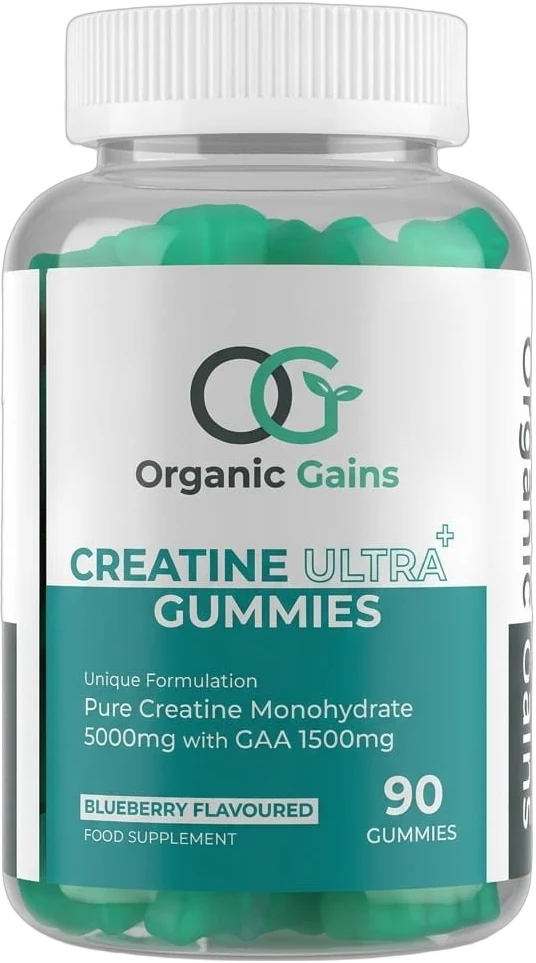
So the question to ask of any creatine, gummy or powder, is how much creatine a day's serving gives you. Three of our Creatine Ultra+ Gummies give you 5,000mg of creatine monohydrate, which is more than 3g of creatine. With powder, you get whatever you measure out. For the fuller answer on gummies alone, read our guide to whether creatine gummies work.
Creatine gummies vs powder, side by side
The gummy column uses the figures printed on our own labels, because those are the gummies we can speak for.
| Creatine gummies | Creatine powder | |
|---|---|---|
| The creatine | Creatine monohydrate, in both of ours | Look for creatine monohydrate on the label |
| A day's serving | 2 to 3 gummies, as the label sets | Scooped or weighed by you |
| Creatine monohydrate in a serving | 5,000mg in three Creatine Ultra+ gummies, 3,333mg in two | Whatever you measure |
| Mixing | None: you chew them | Stirred into a drink |
| Flavour | Blueberry | Plain powder is unflavoured |
| Sugar and calories | 3g of sugars and 30kcal in three Creatine Ultra+ gummies | Plain powder is creatine monohydrate alone |
| Sweetener | Stevia, in Creatine Ultra+ | None in plain powder |
| A loading phase | Not on the label, which sets 2 to 3 a day | Easy to scoop larger amounts |
| What you carry | The jar | The tub, a scoop, a shaker and water |
Where creatine powder wins
One scoop can hold the whole day. With powder, the day's creatine goes down in one scoop and one drink, in whatever amount you choose. With gummies, you chew two or three.
Plain powder is creatine and nothing else. Plain, unflavoured creatine monohydrate powder has no sweetener, no flavouring and no sugar in it. A gummy carries more. Besides the creatine monohydrate and GAA, our Creatine Ultra+ Gummies list water, pectin, sodium citrate, citric acid, stevia and vegetable oil (with carnauba wax), and three of them carry 30kcal and 7.5g of carbohydrate, of which 3g is sugars. If you count every gram you eat, that is worth knowing.
Powder suits a loading phase. Creatine research describes a "loading phase": a short spell of large daily amounts at the start. The International Society of Sports Nutrition's 2017 position stand on creatine, a review of the research, said the quickest method of increasing muscle creatine stores may be about 0.3g of creatine monohydrate per kilogram of body weight a day for 5 to 7 days, followed by 3 to 5g a day. For someone who weighs 70kg, that first week works out at about 21g a day.
That much creatine is a job for powder. Our gummy labels set a serving of 2 to 3 gummies a day and say not to exceed the recommended daily intake, so gummies are for the steady daily amount. Our guide to how long creatine takes to work covers loading, and the route without it.
Where creatine gummies win
Nothing to measure. The label does the measuring for you: two or three gummies a day, with the creatine monohydrate in a serving printed on the jar. There is no scoop to level and no powder on the worktop. Our guide to how many creatine gummies to take a day goes through the count.
Nothing to mix. Creatine does not dissolve well in water, and a 2011 review in the journal Amino Acids called its "rather low solubility in water" a major limitation. The review gave the numbers: a litre of water dissolves about 14g of creatine at 20°C, and only about 6g at 4°C. So if you stir 5g into 300ml of very cold water, less than 2g of it can dissolve, and the rest settles at the bottom of the glass as that gritty last mouthful. Warmer water holds more, 34g a litre at 50°C by the same review. A gummy skips all of that: you chew it, and there is no shaker to wash.
They taste of blueberry. Both our creatine gummies are blueberry flavoured, so your daily creatine tastes of fruit.
They go where you go. A jar of gummies fits in a gym bag or a desk drawer, with no water, scoop or shaker to carry beside it. On the days you are away from your kitchen, your creatine still comes with you.
What about creatine tablets and capsules?
Capsules and tablets sit between the two. Like gummies, they are counted out and need no mixing; unlike gummies, you swallow them with water. How many make up your day depends on how much creatine each one holds, so find the amount per capsule or tablet on the label and count from there. If swallowing a handful of pills every day sounds like a chore, that count is the thing to check before you buy.
What is the best form of creatine?
Creatine monohydrate is the form the research has studied most. The International Society of Sports Nutrition's 2017 position stand called it "the most extensively studied and clinically effective form of creatine for use in nutritional supplements". It also said clinical evidence had not shown that other forms, such as creatine citrate, creatine ethyl ester, buffered creatine and creatine nitrate, promoted greater creatine retention than creatine monohydrate.
A 2022 review in the journal Nutrients looked again at creatine monohydrate and the newer forms sold beside it. It concluded that creatine monohydrate was still the only source of creatine with substantial evidence to support its bioavailability, efficacy and safety. Bioavailability means how much of a substance your body absorbs and puts to use.
So whether you pick a gummy, a powder or a capsule, look for the word monohydrate on the label.
Gummies or powder: which should you choose?
Powder makes sense if you already drink a shake every day, if you want to try a loading phase, or if you want your creatine with nothing else in it. Gummies make sense if you want the count done for you, if you train away from home, or if there is a tub of powder in your cupboard that you keep skipping because of the mixing.
Whichever you choose, take it every day, because the beneficial effect in the claim above is obtained with a daily intake of 3g of creatine. If you are pregnant, breastfeeding, taking medication, under medical supervision or have a health condition, ask your GP or pharmacist before you start.
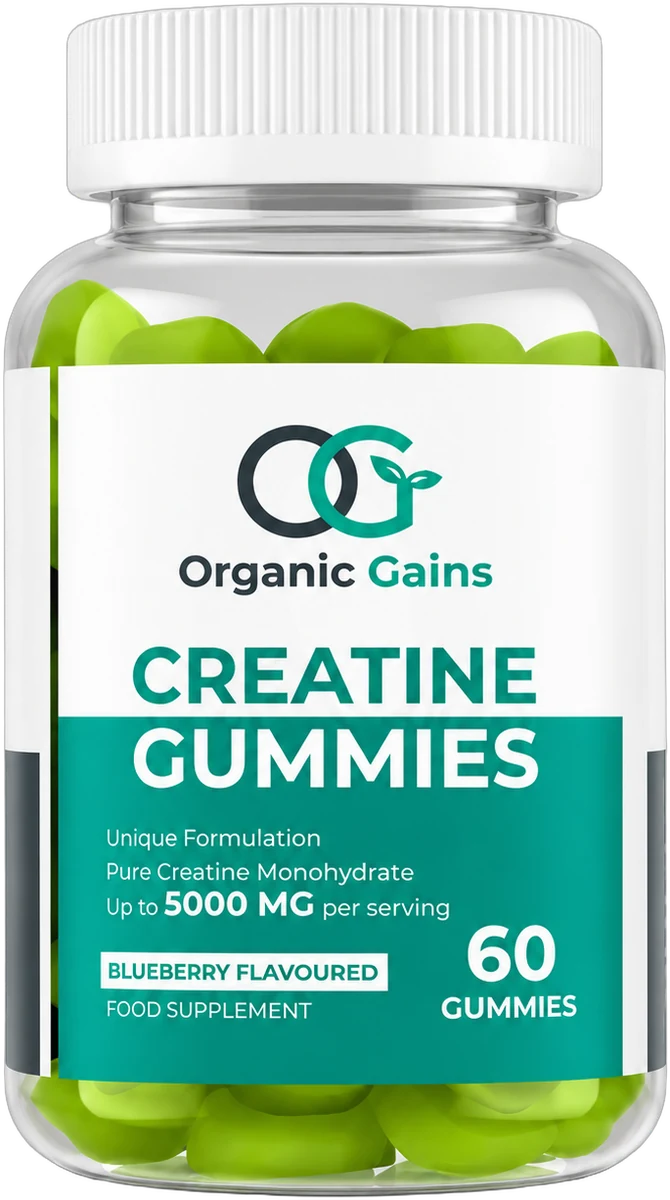
If gummies sound like your kind of creatine, our Creatine Gummies are pure creatine monohydrate: up to 5,000mg of creatine monohydrate in a serving of three blueberry gummies, 60 to a jar. If you would rather have 90 to a jar with GAA (guanidinoacetic acid) beside the creatine, choose Creatine Ultra+ Gummies. Both are marked gluten free, vegan and no added sugar, and UK orders of £50 and over ship free.