Is Creatine Bad for Your Kidneys? What the Research Says
Is creatine bad for your kidneys? What the research found in healthy people, why creatine can raise creatinine on a blood test, and who should check first.
Written by Organic Gains. Published 8 February 2026.
The worry that creatine harms your kidneys is a common one, and part of it comes from a word that sounds almost the same: creatinine. Here is what the research has found, why creatine can change a kidney blood test, and who should talk to a GP before starting.
Is creatine bad for your kidneys?
Not in healthy people taking the recommended amounts, according to the research reviews. In 2021, a review in the International Society of Sports Nutrition's journal summed up more than 20 years of research: creatine, taken at recommended amounts, did not cause kidney damage or reduce kidney function in healthy people.
There is one thing worth knowing before your next blood test. Creatine can raise the level of creatinine in your blood, and creatinine is the number a common kidney test is built on. A rise caused by creatine is unlikely to mean your kidneys are working any less well, but whoever reads your result needs to know you take it.
Creatine and creatinine: why your blood test can change
Creatinine is a waste product. That 2021 review explained that in your muscles, creatine breaks down into creatinine, which passes into your blood and leaves your body in your urine. Healthy kidneys filter it out, so the amount left in your blood gives doctors a stand-in measure of how well your kidneys are working.
The NHS explains that the main kidney blood test measures creatinine. A doctor uses the result, with your age, size and gender, to work out your eGFR (estimated glomerular filtration rate): how many millilitres of waste your kidneys should be able to filter a minute. Healthy kidneys should be able to filter more than 90ml a minute.
Here is the catch. The creatinine in your blood also depends on how much muscle you carry and on what you eat. The same review noted that creatine supplements and creatine-rich foods such as meat can both raise blood creatinine, and that a rise from creatine is unlikely to reflect a fall in kidney function. It said the test should be read with caution in people who eat a lot of meat or take creatine.
Think of your kidneys as the bin lorry and creatinine as the rubbish left out on the street. The blood test counts the bags still on the pavement. Take creatine, or eat a lot of meat, and more bags go out, so the count can go up without the lorry doing its job any worse.
NICE's guideline on chronic kidney disease already allows for what you eat and how much muscle you carry. It tells doctors to advise adults not to eat any meat in the 12 hours before an eGFR blood test, and to read the result with caution in people with a lot of muscle, such as bodybuilders.
So if you take creatine and you are having a kidney blood test, tell the doctor or nurse. That way, a raised creatinine can be read alongside the creatine you take.
What the research found about creatine and kidney function
The 2021 review gathered the evidence in one place. It pointed to an earlier review of creatine studies in which 12 found no rise in creatinine at all, 8 found a rise that stayed within the normal range, and only 2 found a rise above normal limits, one of which was no different from the group not taking creatine.
The International Society of Sports Nutrition's 2017 position stand described American college football players who took about 16g of creatine a day for 5 days, then 5 to 10g a day for 21 months. Their markers of kidney function showed no clinically significant differences from players not taking creatine.
A 2025 trial of healthy young men who did resistance training, published in the Journal of the International Society of Sports Nutrition, gave one group 5g of creatine a day and the other a placebo for 12 weeks. It found no change in creatinine or eGFR after the 12 weeks of creatine.
A more recent review is a 2025 meta-analysis in BMC Nephrology, a study that pools the results of earlier studies. It looked at 21 studies published between 2000 and March 2025, covering healthy people, athletes and patients with long-term conditions, and pooled 12 of them: 177 people taking creatine and 263 who were not. Creatine came with a small rise in creatinine, but no significant difference in GFR, which the authors called the best overall measure of how well the kidneys work. They concluded that the rise in creatinine was modest and temporary, "likely due to metabolic turnover rather than renal impairment", meaning the body's normal processing of creatine.
The same authors were clear about the gaps: most of the studies were short or medium in length, there was little data beyond a year, and many were small trials run at a single centre.
Where the creatine kidney worry came from
The 2021 review traced the worry to two things: confusion between creatine and creatinine, and a case study published in 1998. It described a young man who had had kidney disease for 8 years and had been taking an immunosuppressant medicine for 5 years. He started creatine at 15g a day for a week, then 2g a day for 7 weeks, and his raised blood creatinine was read as his kidneys getting worse.
The review pointed out that it was already known then that creatine supplements and creatine-rich foods raise creatinine, and two separate teams of creatine experts wrote to The Lancet about the case. It added that a small number of later case reports were muddied by other factors: medicines, existing kidney disease, other supplements, doses as high as 100 times the recommended amount, and anabolic steroids.
Who should ask a GP before taking creatine?
Most of the research above is about healthy people at recommended amounts. Talk to your GP or pharmacist before you start creatine if any of these apply to you:
- You have any kidney condition. The 2017 position stand noted that some have suggested people with existing kidney disease check with their doctor first, out of caution.
- You have diabetes or high blood pressure. The NHS lists both among the reasons for regular kidney testing.
- You take medicines regularly, especially long-term medicines that can affect the kidneys, which the NHS says include lithium, omeprazole and non-steroidal anti-inflammatory drugs (NSAIDs).
- You are pregnant or breastfeeding, or under medical supervision.
Whatever your health, stay within the amount on the label: our gummy labels say not to exceed the recommended daily intake. Our guide to how much creatine to take per day explains the amounts, and our guide to creatine gummies side effects covers the other safety questions people ask, including whether creatine causes hair loss.
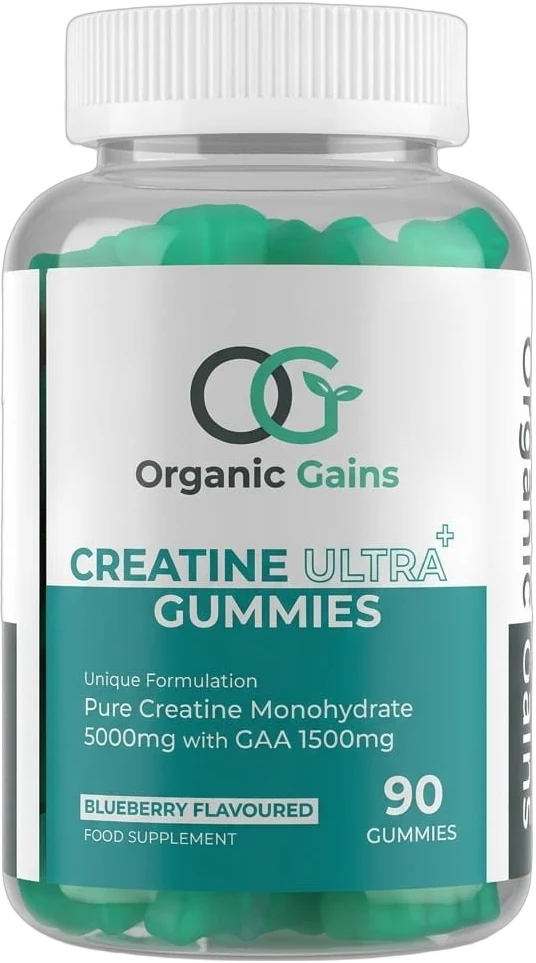
For adults who do high intensity exercise, creatine increases physical performance in successive bursts of short-term, high intensity exercise, and the beneficial effect is obtained with a daily intake of 3g of creatine. Three of our Creatine Ultra+ Gummies give you 5,000mg of creatine monohydrate, which is about 4,395mg of creatine, more than 3g.
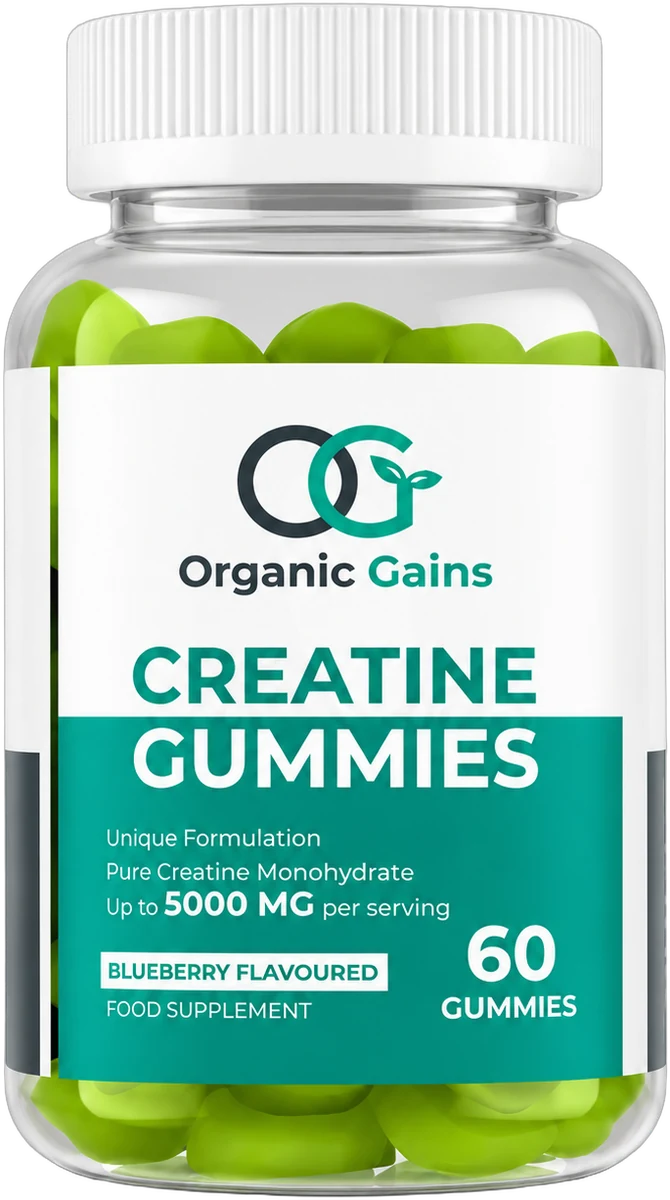
If you would rather have creatine monohydrate without GAA and without a scoop, our Creatine Gummies give you up to 5,000mg of creatine monohydrate in a serving of three blueberry gummies.