Does Creatine Cause Hair Loss? What the Studies Found
Does creatine cause hair loss? What the 2009 rugby study and the 2025 hair trial measured and found, what DHT is, and when to see your GP.
Written by Organic Gains. Published 9 December 2025.
The fear that creatine makes your hair fall out goes back to one small study from 2009, and that study never looked at anyone's hair. In 2025 a trial finally did, so here is what each of them measured and what each one found.
Does creatine cause hair loss?
Not according to the research so far. In 2021 a review in the Journal of the International Society of Sports Nutrition looked at this exact question and found that no study had reported hair loss or baldness in people taking creatine. Then in 2025, the first trial to examine hair directly found no significant difference between men who took creatine for 12 weeks and men who took a placebo.
The whole worry rests on a hormone called DHT, so it helps to know what DHT is and what the 2009 study really measured.
Where the creatine and hair loss worry came from
The 2009 study followed 20 college-aged rugby players in South Africa through their competitive season. Each player took creatine for one spell and a placebo of glucose for another, with six weeks in between, and neither the players nor the researchers knew which was which. In the creatine spell, they took 25g of creatine a day for 7 days, then 5g a day for 14 days, each time with 25g of glucose.
The researchers measured two hormones in the blood: testosterone, and DHT (dihydrotestosterone). Testosterone did not change. DHT rose by 56% after the first 7 days, and it was still 40% above where it started after the next 14. The ratio of DHT to testosterone rose by 36%, then stayed 22% higher.
That rise in DHT is what the whole worry is built on. The study measured hormones in the blood and body composition. It did not measure hair.
What is DHT, and why does it matter for hair?
DHT is a hormone your body makes from testosterone. An enzyme called 5-alpha-reductase does the converting. An enzyme is a protein that makes one specific chemical change in the body, so think of 5-alpha-reductase as the worker whose one job is turning testosterone into DHT.
The 2021 review explained why DHT matters for hair: in men, it said, DHT can attach to hair follicles that are sensitive to it and make them shrink, which leads to hair loss. The same review noted that changes in DHT have been linked to some hair loss, though not all of it. So once a study reported DHT going up, the idea that creatine causes hair loss gained momentum, even though the study had never looked at hair.
The NHS adds one more piece: male and female pattern baldness usually runs in the family.
What the 2021 review said about the rugby study
The 2021 review of common creatine questions, published in the Journal of the International Society of Sports Nutrition, went through the rugby study carefully, and pointed out four things:
- The 2009 results had not been repeated by any other study.
- Hard resistance exercise could raise these hormones by itself.
- The rise in DHT, and in the ratio of DHT to testosterone, stayed well within normal clinical limits.
- Twelve other studies had looked at creatine and testosterone. Ten found no change, and two found small increases after six and seven days. Five of them also measured free testosterone, the testosterone your body uses to make DHT, and found no increase.
Its summary was that the evidence did not show creatine raising testosterone, free testosterone or DHT, or causing hair loss.
The 2025 trial that looked at hair
In 2025, researchers published the first trial to check hair directly, in the Journal of the International Society of Sports Nutrition. They took 45 men aged 18 to 40 who did resistance training and split them at random into two groups. One group took 5g of creatine monohydrate a day for 12 weeks. The other took 5g of maltodextrin, a powder that looked, felt and tasted the same, so nobody could tell which they had. Everyone kept to their usual diet and training.
At the start and at the end, the researchers tested the men's blood for testosterone, free testosterone and DHT. Dermatologists examined the hair on the crown of each man's head with the Trichogram test and the FotoFinder imaging system, measuring hair density, the number of hair groupings (called follicular units) and the total thickness of the hairs.
Thirty-eight men finished the trial. There were no significant differences between the two groups in DHT, in the ratio of DHT to testosterone, or in any of the hair measures. The authors wrote that their study was "the first to directly assess hair follicle health following creatine supplementation, providing strong evidence against the claim that creatine contributes to hair loss."
They also suggested why their DHT result differed from 2009's: their men took no loading phase (a first week of large daily amounts), and the trial ran for 12 weeks instead of 3.
The authors listed the trial's limits too. It included only men, because DHT has been linked to male pattern baldness. It lasted 12 weeks, and they said a longer study at a higher dose might find something different. And it did not record whether the men had a family history of hair loss.
Can stopping creatine reverse hair loss?
The research has not linked creatine to hair loss, so it has nothing to say about stopping it. In the 2025 trial, the hair measures of the men taking creatine did not differ significantly from those of the men taking the placebo.
If your hair is thinning, whether you take creatine or not, the NHS advice is to see a GP if you are worried about it. The GP may be able to tell what is causing it just by looking at your hair.
Does creatine cause hair loss in women?
Both studies were in men. The 2025 trial's authors chose men on purpose, because DHT has been linked to male pattern baldness, and they wrote that future research may be needed in women. The 2021 review's finding was about people in general: no study had reported hair loss or baldness in humans. Our guide to creatine for women covers the rest of what women ask about creatine.
Before you start creatine
If you have a health condition, take medication, or are pregnant or breastfeeding, ask your GP or pharmacist before you start. Our guide to creatine gummies side effects covers the other safety questions, and our guide to how much creatine to take per day explains the amounts, including the difference between a loading phase and a steady daily amount.
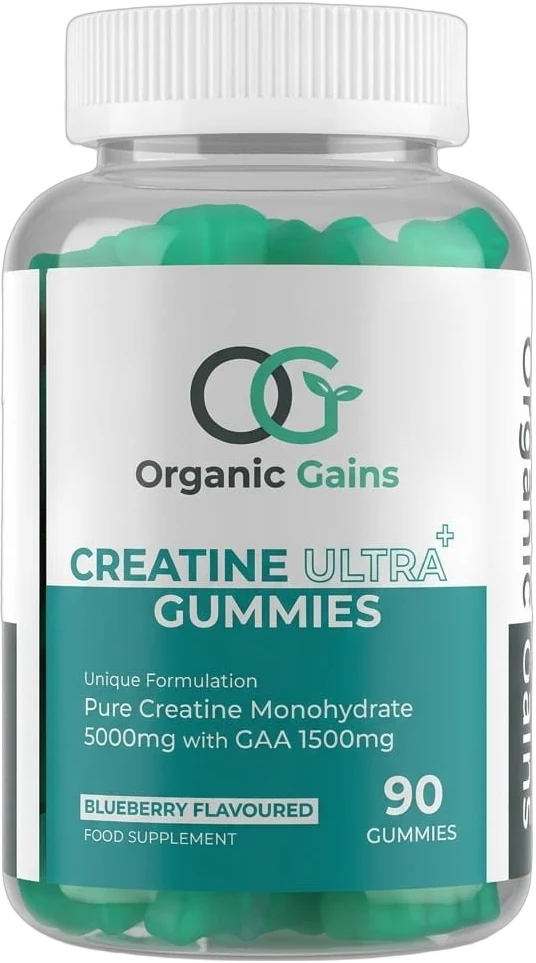
For adults who do high intensity training, creatine increases physical performance in successive bursts of short-term, high intensity exercise, and the beneficial effect is obtained with a daily intake of 3g of creatine. Three of our Creatine Ultra+ Gummies give you 5,000mg of creatine monohydrate, which is more than 3g of creatine.
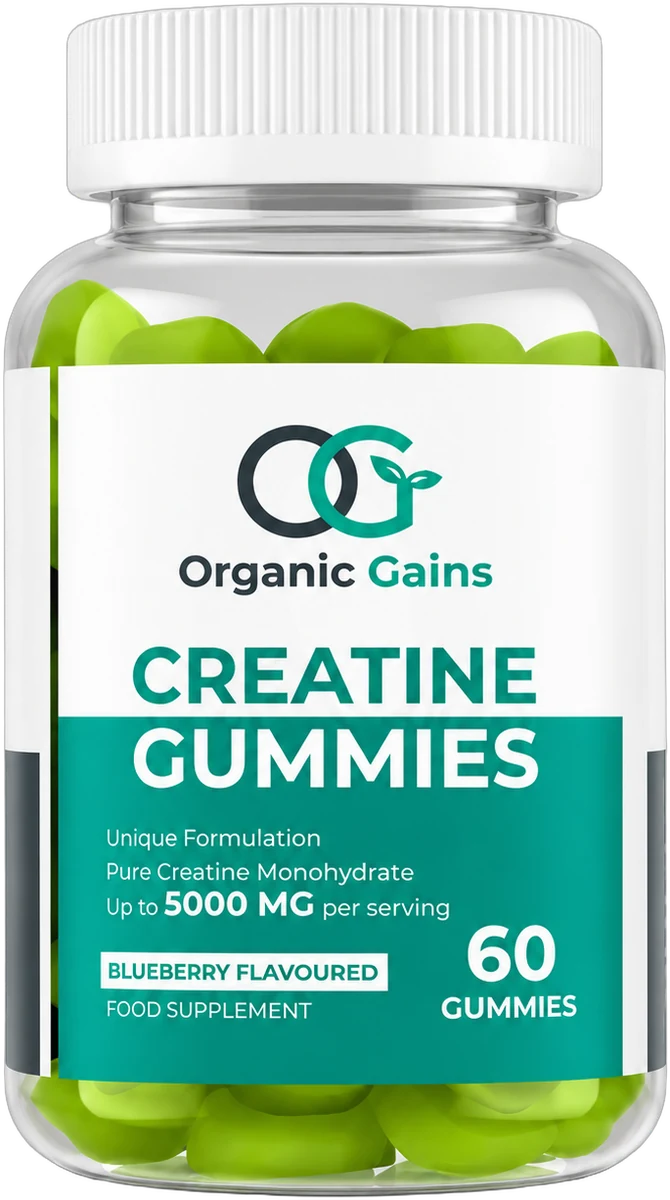
If you want your creatine without a scoop and without GAA, our Creatine Gummies are pure creatine monohydrate: up to 5,000mg of creatine monohydrate in a serving of three blueberry gummies.