How Long Does Creatine Take to Work? Loading vs Daily Doses
What the research found on how long creatine takes: about 6 days of loading or 28 days at 3g a day to raise muscle stores, and what it means for gummies.
Written by Organic Gains. Published 12 July 2025.
In the classic study on this question, the creatine in people's muscles rose by about 20% after six days of loading, and by the same amount after four weeks at 3g a day. Here is what that means for you, why gummies take the daily route, and what happens when you stop.
How long does creatine take to work?
In the research, about a week with loading, and about four weeks at 3 to 5g a day. Those were the times it took for the creatine stored in people's muscles to rise.
Creatine is kept in a store. About 95% of the creatine in your body is held in your muscles, according to the International Society of Sports Nutrition's (ISSN) 2017 position stand on creatine, and the studies on timing measured how full that store got. Picture a tank: in the research, a bigger daily amount filled it sooner.
The best-known measurement comes from a 1996 study by Hultman and colleagues, in which 31 men took creatine in different amounts over different lengths of time. Six days at 20g a day raised the creatine in their muscles by about 20%. Twenty-eight days at 3g a day gave a similar 20% rise, more gradually. And after the six days of loading, 2g a day kept the higher level for a further 30 days. The researchers concluded that 3g a day is, in the long term, likely to be as effective at raising tissue levels as the higher dose.
The ISSN's later papers agree on the timing. Its 2017 position stand said 3 to 5g a day will increase muscle creatine stores over a period of 3 to 4 weeks, and its 2021 paper on common questions about creatine recommended 3 to 5g a day for "a minimum of 4 weeks" to reach muscle creatine levels similar to loading.
| Route | How much a day | How long muscle creatine took to rise in research |
|---|---|---|
| Loading | 20 to 25g, often split into four or five servings, for 5 to 7 days | About 6 days at 20g a day (Hultman, 1996) |
| Everyday | 3 to 5g | About 28 days at 3g a day (Hultman, 1996); 3 to 4 weeks, or at least 4 weeks (ISSN, 2017 and 2021) |
What "working" means for creatine
In the studies above, "working" was measured as the store in the muscles filling up. That is what the timings tell you.
What may be said about creatine and exercise is set by UK law. One authorised claim is for adults who do high intensity exercise: creatine increases physical performance in successive bursts of short-term, high intensity exercise, and the beneficial effect is obtained with a daily intake of 3g of creatine. That claim sets a daily amount. It sets no timescale.
The ISSN was careful on this point too. Its 2017 position stand wrote that the gradual 3g a day route "may therefore have less effect on exercise performance and/or training adaptations until creatine stores are fully saturated", and that the initial performance effects of the 3 to 5g a day method "are less supported". So we give no timescale for any effect on your training. What the research gives you is the time it took the store to fill.
How long do creatine gummies take to kick in?
There is no single moment when creatine kicks in. Creatine reaches the blood fast: the ISSN's 2017 position stand notes that plasma levels of creatine typically peak about 60 minutes after creatine monohydrate is taken by mouth. The store in the muscles is what took the days or weeks above, and in the research that depended on the daily amount and the number of days.
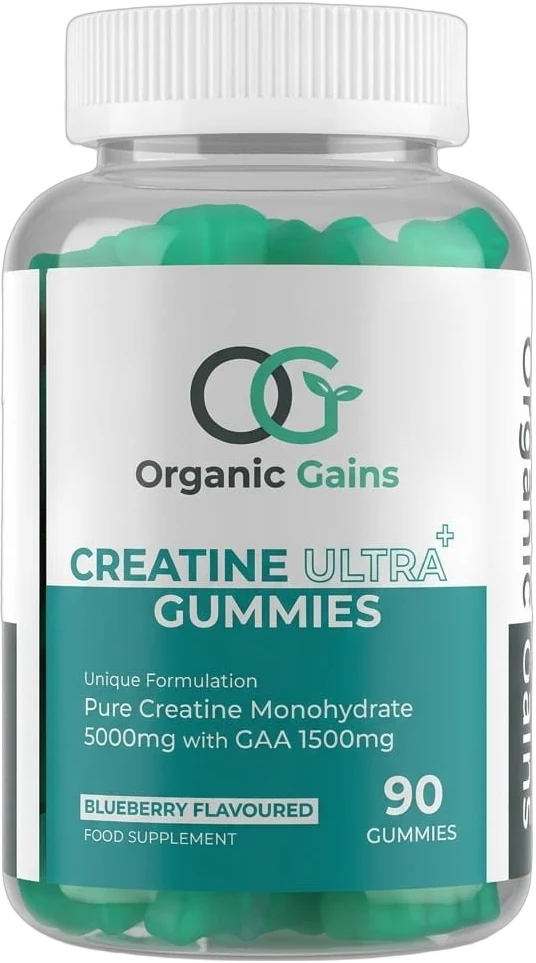
Our creatine gummies carry creatine monohydrate, which the ISSN calls the most commonly studied form of creatine. Two Creatine Ultra+ gummies give you 3,333mg of creatine monohydrate and three give you 5,000mg, inside the 3 to 5g of creatine monohydrate a day that the ISSN's 2017 position stand described. For how to choose between two and three, see how many creatine gummies to take a day. The time of day you take them is a separate question, answered in our guide to when to take creatine gummies.
Do you need a creatine loading phase?
No. The ISSN's 2021 paper was plain about it: "accumulating evidence indicates that you do not have to 'load' creatine." It described loading as 20 to 25g a day for 5 to 7 days, often split into four or five servings of 5g, followed by 3 to 5g a day, and suggested it for an athlete in a hurry, with under 30 days to go. For an athlete or anyone who exercises and plans to take creatine for longer than 30 days, it called the everyday amount a viable option.
The same paper calls a 1992 study by Harris and colleagues a seminal paper on loading. It gave 17 people 5g of creatine monohydrate four or six times a day for two days or more, and measured a significant rise in the creatine in their thigh muscle.
With gummies, loading does not fit the label. Twenty grams of creatine monohydrate a day would take twelve Creatine Ultra+ gummies, four times the label's top serving of three, and the label says not to go over the recommended daily intake. So gummies take the everyday route. For the full picture on daily amounts, from 3g to 10g, see how much creatine to take per day.
Why some people see a bigger rise than others
The starting point differs. The ISSN's 2017 position stand put the average store in a 70kg person at about 120 millimoles per kilogram of dry muscle (a lab measure), with an upper limit of about 160 in most people. Someone who starts near the top has less room to fill.
Harris and colleagues saw this in 1992: the rise was greatest in people who started with the least creatine in their muscles, and in some people it was as much as 50%. The ISSN noted that vegetarians have been reported to have lower stores, 90 to 110 on the same scale, and so may see greater gains in muscle creatine. If you eat no meat or fish, see our guide to whether creatine is vegan.
What happens when you stop taking creatine?
The store empties slowly. In Hultman's 1996 study, 30 days after the men stopped taking creatine, the level in their muscles was no different from where it started. The ISSN's 2017 position stand put the usual time at 4 to 6 weeks for creatine stores to return to baseline.
It added that no evidence has suggested muscle creatine falls below where it started once people stop, so the body's own production of creatine does not appear to be suppressed in the long term.
Starting your daily creatine
If you want to start the everyday route, two or three Creatine Ultra+ Gummies a day, with breakfast or after training, give you 3,333mg or 5,000mg of creatine monohydrate. For adults doing high intensity exercise, creatine increases physical performance in successive bursts of short-term, high intensity exercise, and the beneficial effect is obtained with a daily intake of 3g of creatine. Three gummies cover that 3g: creatine monohydrate is 87.9% creatine by weight, so 5,000mg of it carries about 4,395mg of creatine. There are 90 blueberry gummies in a jar, which lasts 30 days at three a day or 45 days at two, with free UK delivery on orders of £50 and over. If you have a health condition, take medication, or are pregnant or breastfeeding, ask your GP or pharmacist before you take creatine.