Does Creatine Make You Gain Weight? Water, Bloating and Fat
Why the scales can move when you start creatine: the water weight research measured, whether creatine makes you fat, and what studies found on bloating.
Written by Organic Gains. Published 11 June 2025.
Start creatine, step on the scales a week later, and the number can be higher than you expected. Researchers have measured that gain, and in a loading week they found it was mostly water.
Does creatine make you gain weight?
It can, and the research found it happened mostly in the first days. The International Society of Sports Nutrition (ISSN) noted in its 2017 position stand on creatine that more than 1,000 studies had been done on creatine since the early 1990s, and it said the only side effect consistently reported in that research was weight gain.
The research gives its numbers for loading. Some people "load" creatine, taking 20g a day for 5 to 7 days before dropping to a smaller daily amount. A 2021 paper on common creatine questions, published in the ISSN's journal, said a loading week like that typically added 1 to 3kg of body weight, and that most of it was water the body held on to. The 2017 position stand added that early studies measured about half a litre to a litre of extra fluid during loading, roughly in step with the weight people gained.
Why does creatine make you hold water?
The 2021 paper explained that creatine is osmotically active, which means it draws water towards it, a little like a sponge. It said muscles take creatine in with the help of sodium, and that water is taken up into the muscle along with it.
The paper put the early water gain mainly down to water inside the cells, and it said this was the most common side effect of creatine in the first several days. Longer studies looked different. Several training studies lasting 5 to 10 weeks found no rise in total body water, though not every study agreed, and the paper's summary was that over longer periods creatine may not lead to water retention.
Does creatine make you fat?
The 2021 paper called this a concern among people who exercise, and took it on directly. It said the concern may come from the gain in body weight some people see, then looked at randomised controlled trials lasting from one week to two years. Its conclusion was that creatine supplementation does not increase fat mass across a variety of populations.
If you are a woman wondering the same thing, a 2024 follow-up paper in the same journal reported a review of 29 studies covering 951 female participants taking 1 to 30g of creatine a day. The review found no significant difference in weight gain, counted as a side effect, between the creatine and control groups. Our guide to creatine for women goes further into what the research looked at.
If you count calories, the Creatine Ultra+ label prints them: 20kcal in two gummies and 30kcal in three.
Does creatine make you bloated?
Bloating is a stomach complaint, and a 2008 study by Ostojic and Ahmetovic looked at creatine and the stomach directly. It gave 59 footballers either two 5g doses of creatine a day, one 10g dose a day, or a placebo, for 28 days, and asked them to report any stomach and gut problems. Across the three groups together, the placebo group included, the most common complaints were diarrhoea, stomach upset and belching. The two 5g doses showed no significant difference from the placebo. The single 10g dose brought more diarrhoea: 55.6% of that group reported it, against 28.6% on two 5g doses and 35.0% on the placebo.
The 2021 paper advised people who load to split their 20g a day into servings of 10g or less, because doses of more than 10g might lead to stomach upset and diarrhoea.
The label serving on both our creatine gummies is two to three a day, and our guide to how many creatine gummies to take a day goes through the serving.
Why did I gain 10 pounds after taking creatine?
A pound is 0.45359237kg under the Units of Measurement Regulations 1995, so 10 pounds is about 4.5kg. The 2021 paper gave 1 to 3kg, mostly water, as the typical gain in a loading week, so 10 pounds is more than that.
If your weight has gone up by that much and you can't account for it, have a word with your GP. The same goes for anyone with a health condition, on medication, or pregnant or breastfeeding: ask your GP or pharmacist before you take creatine.
What to expect, week by week
The first week. If you load at 20g a day, the research above put the typical gain at 1 to 3kg in that week, mostly water. The 2021 paper said that for anyone who wants to avoid the weight gain that can come with loading, taking a smaller amount every day from the start is a workable option.
Weeks one to four on a smaller daily amount. The 2021 paper reported a study by Hultman and colleagues in which 3g a day for 28 days raised muscle creatine by about the same amount, around 20%, as 20g a day for 6 days. The paper said that 3 to 5g a day filled the muscles more slowly, and suggested at least 4 weeks at that amount to reach a similar level. Our guide to how long creatine takes to work covers those weeks in more detail.
After that. Several of the training studies of 5 to 10 weeks that the 2021 paper reviewed found no rise in total body water, and the trials it reviewed lasting up to two years did not show creatine increasing fat mass.
Starting creatine without the scoop
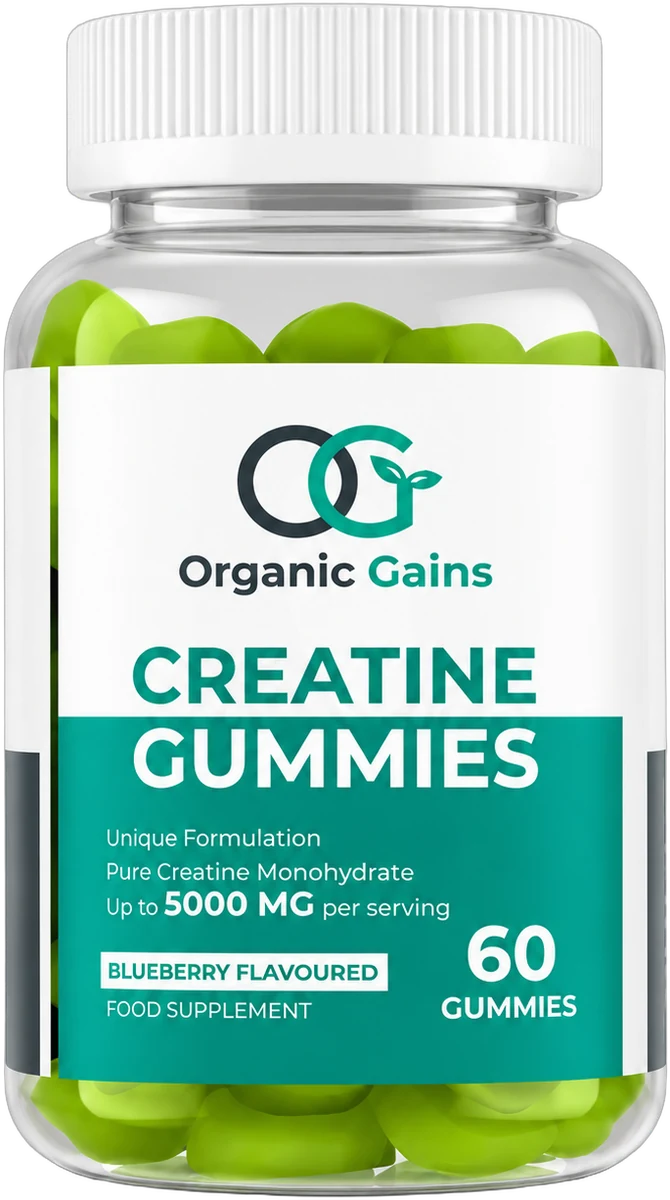
If you would like your creatine without powder to measure, Creatine Gummies give you up to 5,000mg of creatine monohydrate in a serving of three blueberry gummies, 60 to a jar. They are marked vegan, gluten free and no added sugar. Take the serving on the label, two to three gummies a day, and our guide to creatine gummies side effects answers the other questions people ask before they start.